Pressure treated lumber: use categories, ground contact, fasteners and safe handling
What pressure treated lumber is, above-ground vs ground-contact ratings, fasteners that won't corrode, drying before staining, and safe cutting and disposal.
By Revivista Editorial TeamUpdated 2 min read
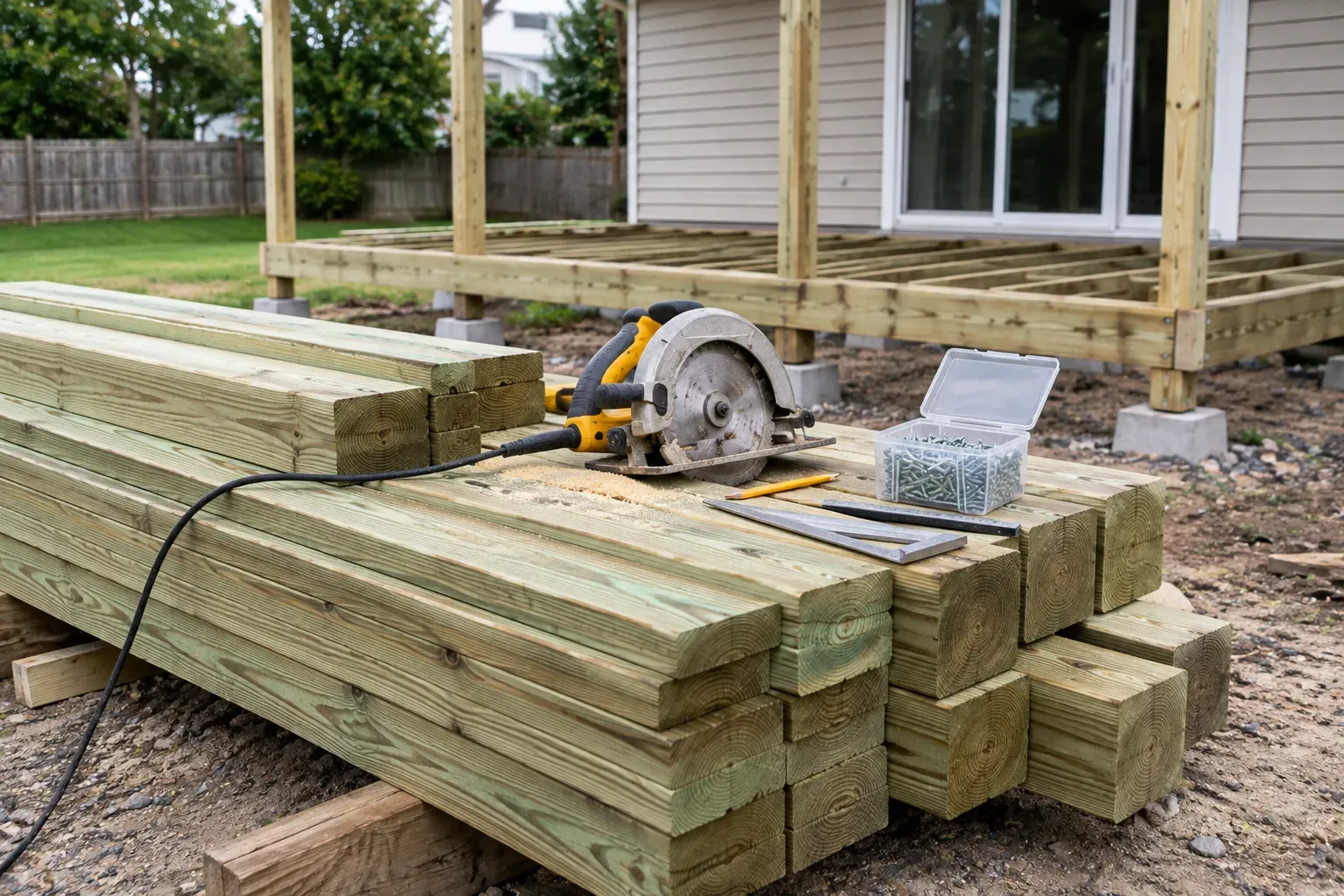
Pressure treated lumber is wood — usually southern yellow pine or similar softwood — that has had a preservative forced deep into the fibers under pressure. The treatment protects against rot and wood-boring insects, which is why it is the standard for deck framing, fence posts, raised beds and other outdoor projects.
Above ground or ground contact?
Treated lumber is labeled with a use category on the end tag. The two you will see most:
| Rating | Use for | Examples |
|---|---|---|
| Above ground | Wood that stays off the ground, drains and dries easily | Deck boards, railings, fence boards |
| Ground contact | Wood in or near soil, or hard to replace, or that stays wet | Posts, deck joists and beams close to the ground, landscape timbers |
When in doubt, use ground-contact lumber. Framing that is close to the ground, covered by decking that traps debris, or difficult to replace later benefits from the higher retention of preservative. Check the tag and the manufacturer’s guidance, and your local building code for deck framing.
Fasteners and connectors
Modern copper-based preservatives are more corrosive to steel than older treatments. Use:
- Hot-dip galvanized or stainless steel screws, nails, bolts and hangers,
- connectors rated by their maker for use with treated lumber.
Stainless steel is recommended near salt water or pools. Do not mix galvanized and stainless parts in the same connection.
Wet lumber: let it dry before you finish
Treated lumber often arrives wet from treatment. It shrinks as it dries, which can open gaps between deck boards.
- For deck boards, many builders install them tight together so drying opens a small gap.
- Wait until the wood is dry before staining or sealing — the finish manufacturer usually gives a test, such as sprinkling water to see if it soaks in.
- Kiln-dried after treatment (KDAT) lumber is drier and more stable, at a higher price.
Cut ends
Cutting exposes untreated wood in the center of the board. Brush a cut-end preservative onto cuts, especially on posts and anything in ground contact.
Safe handling
- Wear gloves, a dust mask and eye protection when cutting; work outdoors.
- Wash your hands before eating or drinking and wash work clothes separately.
- Never burn treated wood — not in fire pits, stoves or fireplaces.
- Dispose of scraps according to your local waste rules.
For food gardens, many gardeners use naturally rot-resistant woods or line beds; check the treatment information if you plan to grow vegetables in treated-lumber beds.
Quick checklist
- Correct use category on the end tag (above ground or ground contact)
- Hot-dip galvanized or stainless fasteners and rated connectors
- Cut ends treated
- Wood dry before staining
- Gloves, mask and no burning of offcuts
Planning a deck? Our decking calculator estimates boards, joists and screws.