Best paint colors for a bedroom: how to choose a color you will still like in five years
How to choose a bedroom paint color that feels restful: color families that work, how light and room size change them, sheen, and how to test before you commit.
By Revivista Editorial TeamUpdated 3 min read
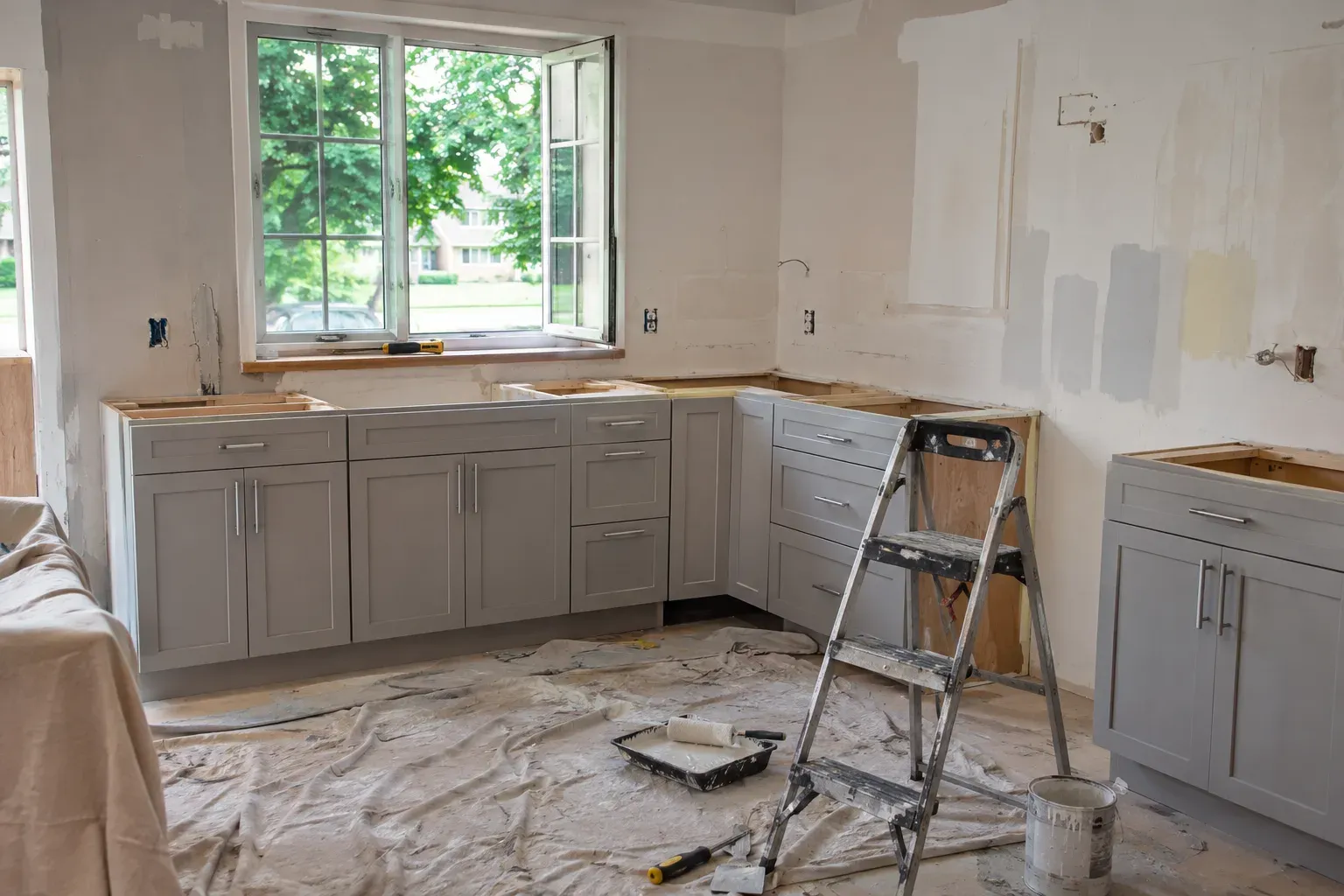
There is no single best paint color for a bedroom — but there is a best color for your bedroom: one that feels calm in the evening light, works with your bedding and flooring, and does not look completely different on a gray morning. This guide narrows down the options and shows how to test them.
For the general method — undertones, light direction and sampling — see our guide on how to choose a paint color. Here we focus on what matters in a bedroom.
What a bedroom color has to do
A bedroom is used mostly in the morning and evening, often under lamps rather than daylight. So a good bedroom color:
- feels restful rather than energizing,
- still looks good under warm artificial light,
- forms a quiet background for bedding, curtains and headboard,
- does not show every scuff on the wall behind the bed.
Color families that work well
| Color family | Mood | Works best with | Watch out for |
|---|---|---|---|
| Soft blues and blue-grays | Calm, cool, airy | White bedding, pale wood, south-facing rooms | Can feel cold in north-facing rooms — choose a version with a little gray or green in it |
| Muted greens (sage, eucalyptus, olive) | Natural, relaxing | Wood, linen, plants, brass | Bright, yellow-greens can look acidic under warm bulbs |
| Warm whites and creams | Light, simple | Any style; small rooms | Very yellow whites can look dingy at night; very cool whites can look clinical |
| Greige and taupe | Cozy, neutral | Mixed furniture styles, warm floors | Check the undertone: some lean pink or purple |
| Dusty pinks and terracotta | Warm, enveloping | Natural textiles, rattan, warm woods | Strong pinks can dominate; pick muted, grayed versions |
| Deep colors (navy, forest green, charcoal) | Dramatic, cocooning | Larger rooms or a single feature wall behind the bed | Need good-quality paint and often an extra coat; make small rooms feel smaller |
Adjust for your room
- Small bedroom: lighter colors make the walls feel farther away. Painting the trim and ceiling a shade close to the wall color can make the room feel bigger than a strong contrast does.
- Large bedroom: deeper colors can make a big room feel more intimate.
- North-facing room: the light is cooler and flatter. Warm neutrals, soft greens and warmer blues usually hold up better than icy shades.
- South-facing room: warm, bright light. Cooler colors stay fresh; warm colors can look much stronger than on the chip.
- Lamp light: most bedside bulbs are warm white, which pushes colors toward yellow. Always look at your samples at night with your own lamps on.
Feature wall or all four walls?
A feature wall behind the headboard is an easy way to try a deeper color without committing the whole room. It works best on the wall you look past, not at, when you lie in bed — usually the headboard wall. If you are drawn to a deep shade but worried, start there.
Sheen for bedroom walls
- Matte or flat: hides wall imperfections and gives a soft, velvety look. Choose a scrubbable or washable matte if you can.
- Eggshell: slightly easier to wipe clean; a common choice for bedrooms.
- Satin or semi-gloss: best kept for trim, doors and furniture.
Test before you buy
- Choose two or three candidates.
- Paint large sample boards — at least about 2 × 2 ft — with two coats.
- Place them on different walls, including behind the bed and next to the window.
- Check them in the morning, afternoon and at night under your lamps, for two or three days.
- Hold them against your bedding, headboard and flooring.
How much paint do you need?
Measure the walls and use our paint calculator. It subtracts doors and windows and uses the coverage from the can. A typical bedroom needs two coats; a deep color over a light one may need a third or a tinted primer.
Quick checklist
- Color chosen to work with bedding, furniture and floor
- Room size and light direction considered
- Samples checked at night under your own lamps
- Sheen chosen: matte or eggshell for walls
- Paint quantity calculated