How to plant grass seed: timing, seeding rates and watering for a new lawn
When to plant grass seed, how much seed per 1,000 sq ft, how to prepare the soil, sow, mulch and water, and when to mow a newly seeded lawn for the first time.
By Revivista Editorial TeamUpdated 3 min read
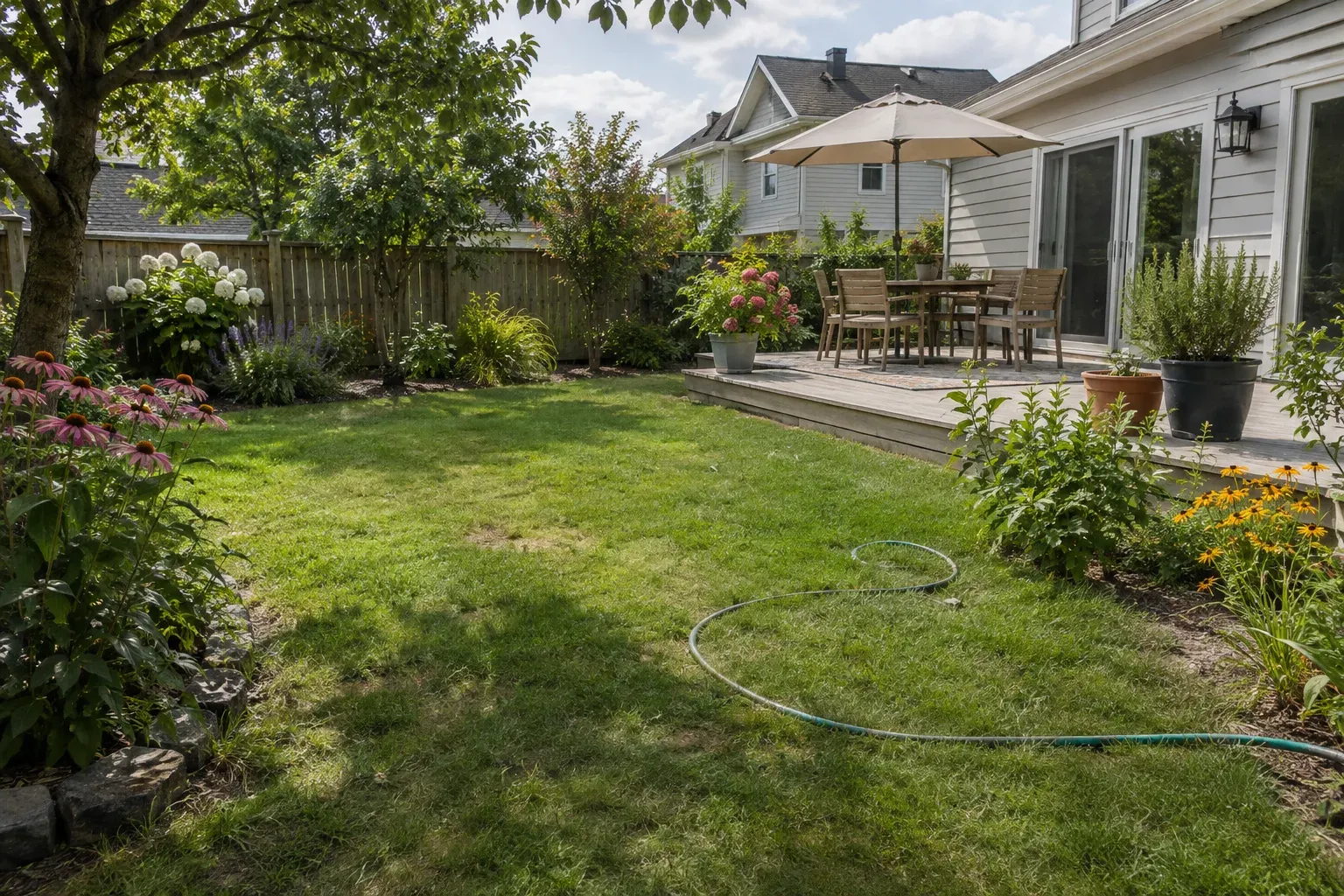
Planting grass seed works best when three things line up: the right season for your grass type, good seed-to-soil contact, and steady moisture until the seedlings are established. Get those right and the rest is routine.
Start by measuring the area with our lawn area calculator — seeding rates are given per 1,000 square feet, so you need the size before you buy.
1. Pick the right time
It depends on whether you grow cool-season grasses (Kentucky bluegrass, tall fescue, perennial ryegrass, fine fescues — common across the northern half of the US) or warm-season grasses (Bermudagrass, zoysia, St. Augustine, centipede — common in the South).
- Cool-season grasses: late summer to early fall is the ideal time. University of Illinois Extension gives early August to early September for northern Illinois, mid-August to mid-September for central Illinois and September for southern Illinois. April is the second choice; seeding from late spring through mid-summer often struggles because summer heat slows the young grass.
- Warm-season grasses germinate and grow when soils are warm, so they are generally planted from late spring into early summer. Check your state’s land-grant university extension for local dates.
2. Choose seed and work out how much to buy
Buy seed suited to your region, sun and use. Read the label: it lists the species, the germination percentage and the weed seed content.
Seeding rates from University of Illinois Extension, in pounds per 1,000 sq ft:
| Seed | Rate |
|---|---|
| Kentucky bluegrass blend | 1–3 lb |
| Kentucky bluegrass / perennial ryegrass mix (80:20) | 3–4 lb |
| Kentucky bluegrass / fine fescue mix (50:50) | 3–5 lb |
| Tall fescue blend | 6–9 lb |
Follow the rate on your bag if it differs. More is not better: going over the rate can produce weak, spindly seedlings and encourage disease.
Example: a 2,500 sq ft front yard with a tall fescue blend at 7 lb per 1,000 sq ft needs 2.5 × 7 = 17.5 lb of seed.
3. Prepare the soil
- Remove existing weeds, stones and debris.
- Loosen compacted soil and rake it level, filling low spots so water does not pool.
- A soil test (many extension offices offer one) tells you whether lime or fertilizer is needed before seeding.
- Finish with a firm, fine surface — loose fluffy soil dries out quickly and leaves footprints that become dips.
4. Sow in two directions
- Set your spreader for half the seeding rate.
- Sow the whole area walking east–west, then sow the second half walking north–south. This avoids stripes and bare patches.
- Drag a leaf rake lightly over the surface so the seed is in contact with the soil, but not buried deep.
- Spread a light straw mulch — Illinois Extension suggests about one bale per 1,000 sq ft. It slows drying and keeps soil and seed from washing away.
5. Water little and often — then deeper
- Until the seed germinates, keep the top layer of soil constantly moist. That usually means light watering one or more times a day in warm, dry weather.
- Once the seedlings appear, water deeper and less often, so the roots grow down.
- Use a gentle spray so the seed is not washed into puddles. Our irrigation water calculator helps estimate how much water a given area needs.
6. First mowing
Mow for the first time when the grass is about 3 to 3½ inches tall, with a sharp blade and when the soil is dry enough not to rut. Keep foot traffic light for the first few months.
Common mistakes
- Seeding at the wrong time of year for the grass type — the most common cause of failure.
- Letting the seedbed dry out for a single hot afternoon during germination.
- Burying seed too deep or leaving it sitting on top of hard ground.
- Sowing far more seed than the label says.
- Using weed killers on a new lawn without checking the label: many are not safe for seedlings.
Quick checklist
- Area measured and seed amount calculated
- Seed suited to region, sun and shade
- Soil cleared, loosened, leveled and firmed
- Seed spread in two directions and raked in
- Light straw mulch applied
- Watering plan for the next three to four weeks
Sources
- University of Illinois Extension — Planting a new lawn — accessed November 8, 2026