Tree removal: when a tree should come down, permits, hiring an arborist and stump options
When to remove a tree, warning signs of a dangerous tree, permits and protected trees, why to hire an insured certified arborist, and stump removal options.
By Revivista Editorial TeamUpdated 2 min read
Removing a tree is expensive, hard to undo and can be dangerous. Before you call in a crew, decide whether the tree really needs to go, check the rules where you live, and hire a professional with the right insurance and training.
Signs a tree may need to come down
- Dead or dying: no leaves in the growing season, brittle bark falling away, fungi at the base.
- Structural problems: large cracks in the trunk, splits where major limbs meet, a sudden new lean.
- Root damage: heaving soil around the base, roots cut during construction, or decay at the root flare.
- Hollow or decayed trunk: cavities, soft wood or mushrooms growing from the trunk.
- Too close to the house or power lines: branches touching the roof or wires, or roots damaging foundations or pipes.
Many problems can be fixed with pruning, cabling or treatment instead of removal. A certified arborist can assess the tree and tell you the options.
Permits and protected trees
Many cities and counties regulate tree removal, especially for large trees, certain species or trees in front yards, near streets or in historic districts. HOAs often have their own rules. Check with your local government before removing a tree — fines can be steep. Trees on the property line usually need the neighbor’s agreement.
Power lines and safety
Never work on trees near power lines yourself. Contact your utility company; many will trim or remove trees that touch their lines. Felling large trees, climbing and using chainsaws at height are jobs for trained crews with proper equipment.
Hiring an arborist or tree service
- Ask for proof of liability and workers’ compensation insurance — if an uninsured worker is hurt on your property, you may be liable.
- Look for certified arborists (for example ISA-certified) for assessments.
- Get written quotes that state what is included: felling, cleanup, hauling, wood left on site or removed, stump grinding.
- Be wary of door-to-door offers after storms and of anyone who recommends “topping” a healthy tree.
What the job involves
- Open space: the tree can be felled in one piece if there is room.
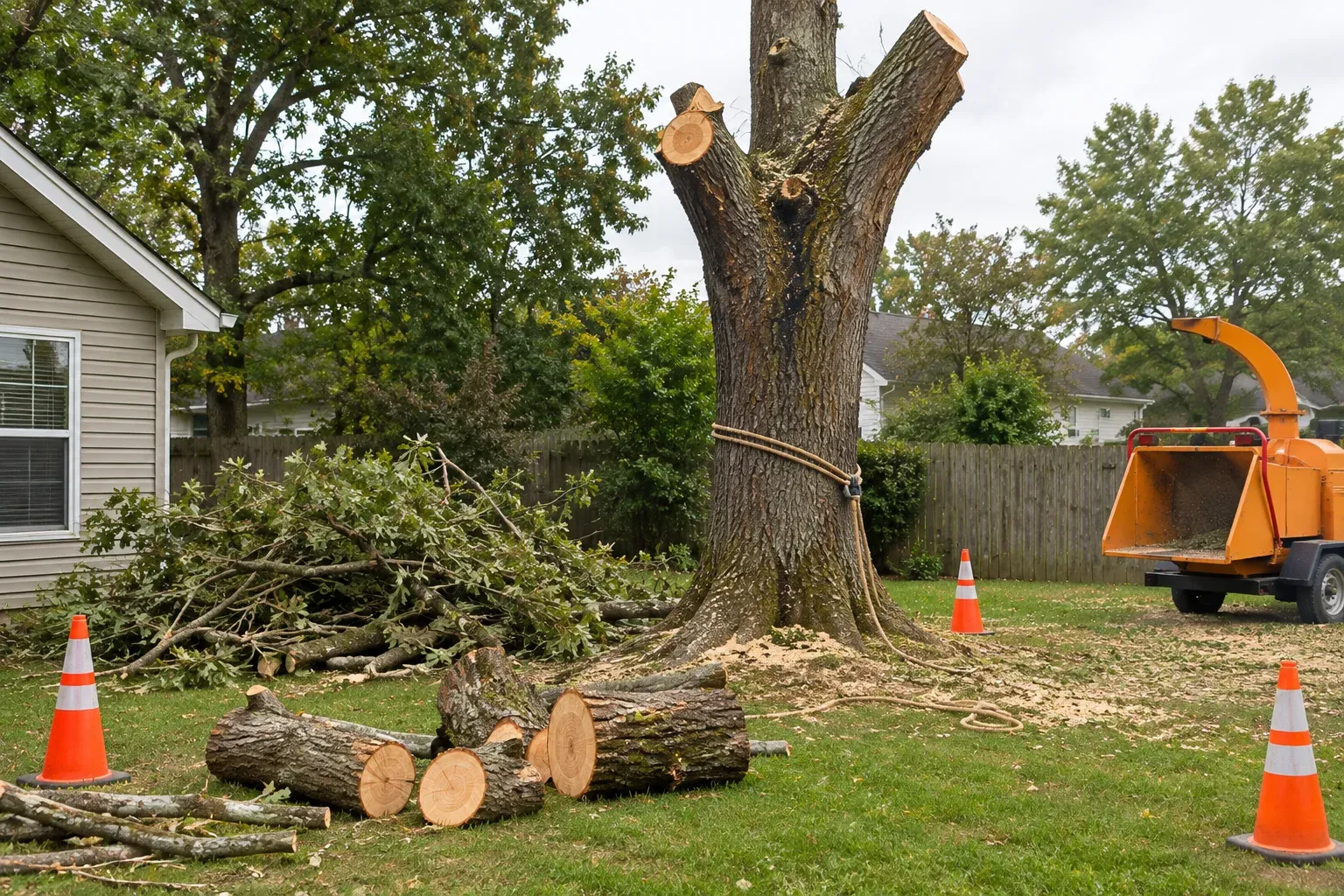
- Tight spaces: the crew climbs or uses a lift to remove the tree in sections, lowering pieces with ropes.
- Cleanup: branches are chipped; the trunk is cut into logs that can be left for firewood or hauled away.
Stump options
| Option | What happens | Notes |
|---|---|---|
| Stump grinding | The stump is ground down below ground level | Most common; leaves wood chips to fill the hole |
| Full stump removal | Stump and main roots are dug out | Needed if you plan to build or plant in the same spot |
| Leave the stump | Cut low and left to rot | Cheapest; some species resprout |
Call 811 before any grinding or digging so underground utilities can be marked.
Quick checklist
- Tree assessed — removal really needed?
- Local permit and HOA rules checked
- Utility contacted if lines are nearby
- Insured, qualified tree service with written quote
- Stump plan decided, 811 called before grinding