Raised garden beds: how to build, fill and plant them
How to build a raised garden bed: the best size and height, timber, metal or brick, what to put in the bottom, how much soil and compost you need, and what to grow.
By Revivista Editorial TeamUpdated 2 min read
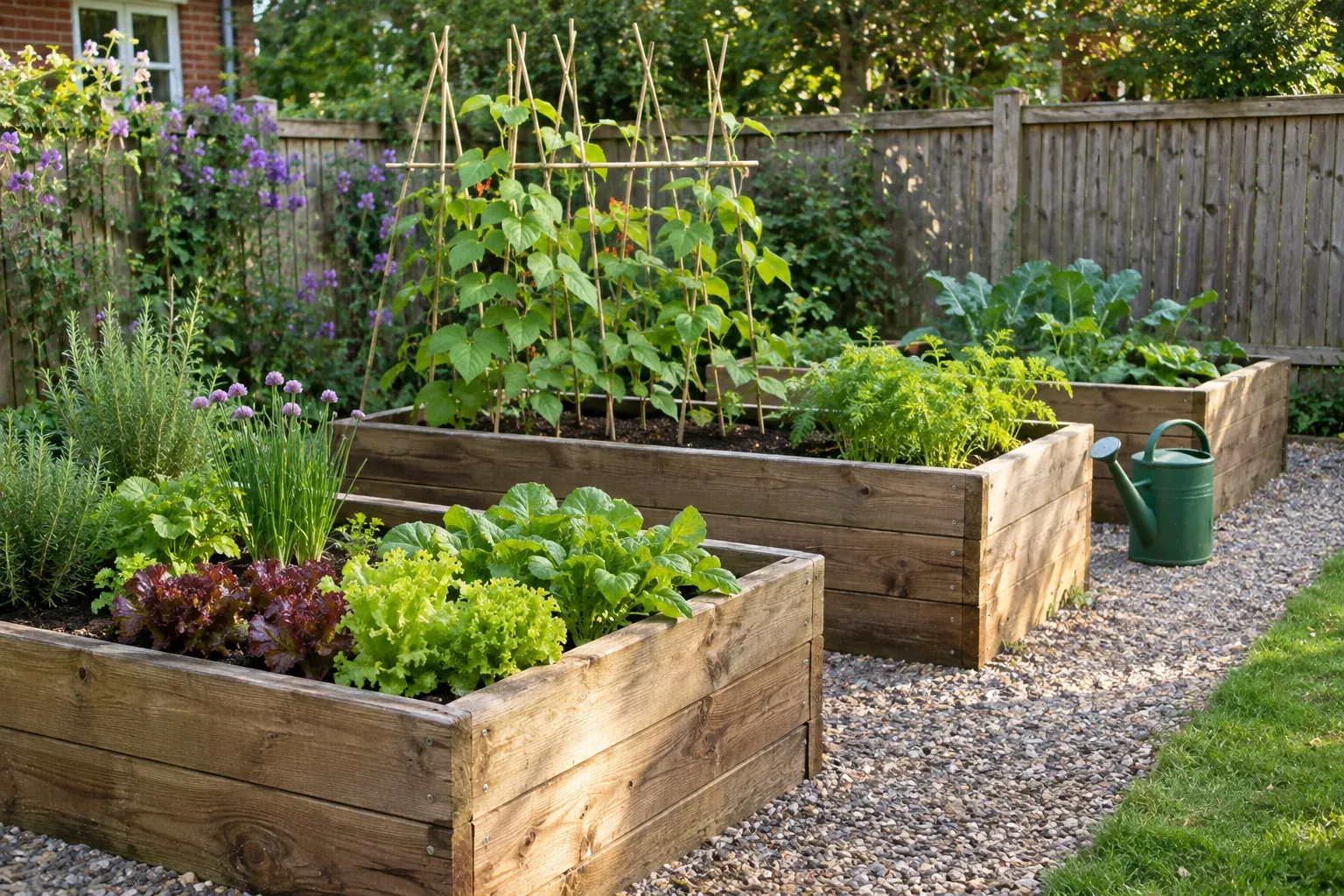
A raised bed is a bottomless box filled with soil and compost. It warms up earlier in spring, drains well, keeps paths and growing areas separate, and is easier on the back. It is ideal for vegetables, herbs and cut flowers — and for gardens with heavy clay or poor soil.
Size and height
- Width: keep beds narrow enough to reach the middle from both sides without stepping on the soil — around 1.2 m is a common choice, or about 60–90 cm if you can only reach from one side.
- Length: whatever fits; longer beds may need extra bracing in the middle.
- Height: 20–30 cm is enough for most crops on decent soil. Taller beds (60 cm or more) are easier to work without bending but need much more filling.
- Leave paths wide enough for a wheelbarrow between beds.
Materials
| Material | Pros | Cons |
|---|---|---|
| Timber (treated softwood, larch, oak, sleepers) | Natural look, easy to build | Rots eventually; check the treatment is suitable for food growing |
| Galvanised steel | Long-lasting, slim walls, modern | Can heat up in sun; higher cost |
| Brick or block | Permanent, very durable | More work, needs a footing |
| Recycled plastic boards | Rot-proof | Look less natural |
Avoid old railway sleepers treated with creosote for food growing.
Building a timber bed
- Choose a sunny spot — most vegetables need at least six hours of sun.
- Level the ground and mark out the bed.
- Screw the boards to corner posts. For taller beds, add a mid-post on long sides.
- Line the bottom with cardboard to smother grass and weeds (it rots away). Use wire mesh underneath if moles or rodents are a problem.
- Optionally line the inside walls with a permeable membrane to slow timber rot — not plastic sheeting, which traps water.
Filling the bed
Fill with a mix of good-quality topsoil and well-rotted compost or manure. Tall beds can be partly filled at the bottom with woody material, logs or rough organic matter, which saves soil — but this settles as it breaks down, so top up each year.
How much do you need? Multiply length × width × depth. A bed 2.4 m × 1.2 m × 0.3 m holds about 0.86 m³ — roughly 860 litres of soil and compost. Compost is often sold in litres per bag, so divide by the bag size. Our area calculator helps with odd shapes.
What to grow
Raised beds suit salad leaves, herbs, carrots, beetroot, onions, beans, strawberries and courgettes. Plant closer than in rows, rotate crops between beds each year, and mulch with compost every autumn or spring.
Watering
Raised beds drain fast and can dry out in summer. Water deeply rather than little and often, mulch the surface, and consider a drip line or soaker hose on a timer.
Quick checklist
- Sunny, level site
- Width you can reach across
- Material suitable for food growing
- Cardboard base, mesh if needed
- Topsoil and compost volume calculated
- Watering plan for summer