Bathroom tiles: porcelain or ceramic, sizes, slip resistance and how many to buy
How to choose bathroom tiles: porcelain vs ceramic, large or small tiles, slip resistance for floors and showers, grout, waterproofing and how many to buy.
By Revivista Editorial TeamUpdated 2 min read
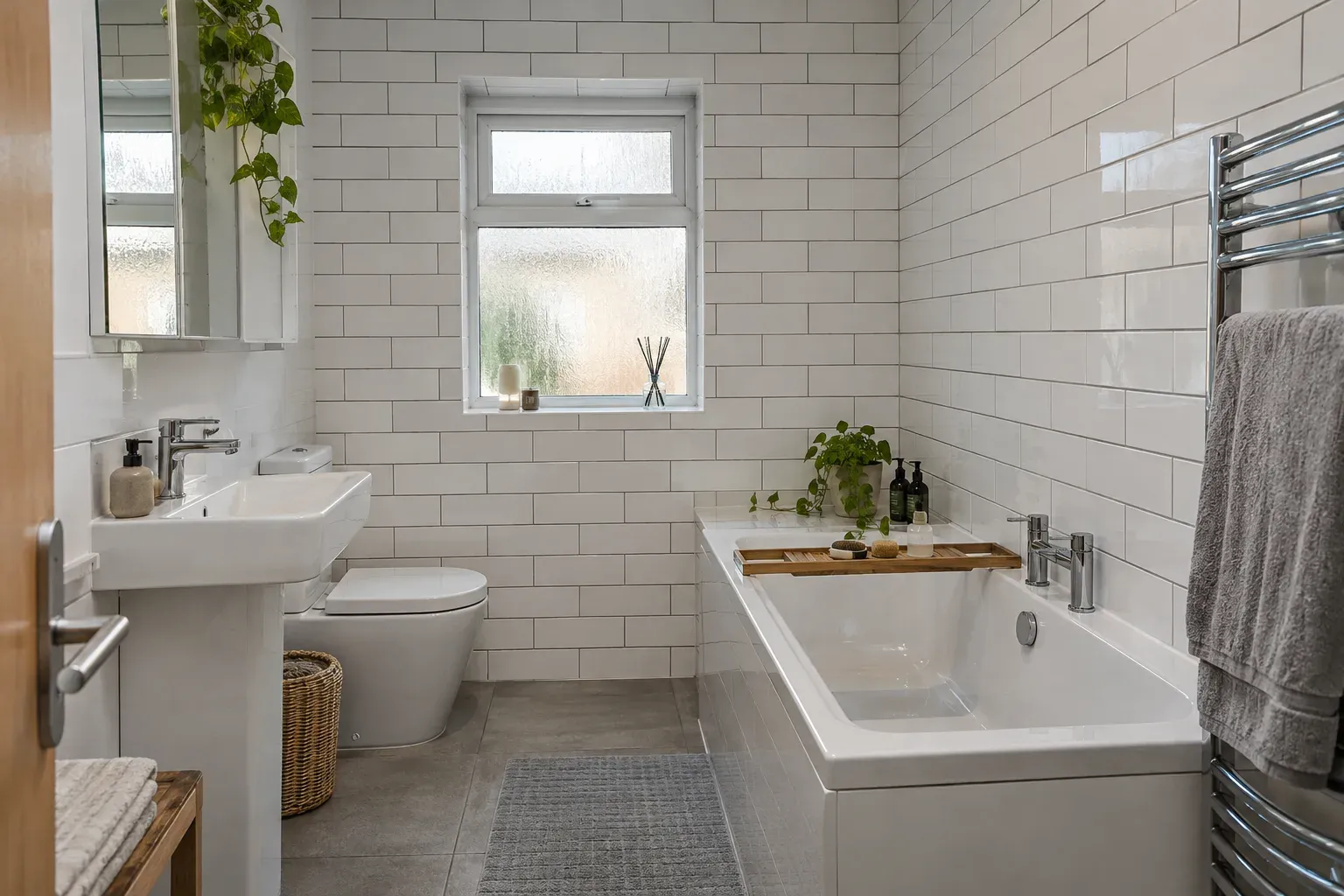
Bathroom tiles have to cope with water, steam, cleaning products and bare feet — and still look good for years. Choose the material for where it goes, the size for the room and the finish for safety, then work out how many you need.
Porcelain or ceramic?
| Porcelain | Ceramic | |
|---|---|---|
| Body | Very dense, low water absorption | Softer, more porous body under the glaze |
| Best for | Floors, showers, wet rooms, walls | Walls, splashbacks, low-traffic areas |
| Cutting | Harder to cut, needs a good cutter | Easier to cut and drill |
| Weight | Heavier | Lighter — useful on walls |
For floors and showers, porcelain is the usual choice. Glazed ceramic is fine on most bathroom walls.
Size
- Large-format tiles (such as 60 × 60 cm or 60 × 120 cm) mean fewer grout lines and make a small bathroom feel bigger — but need a very flat floor or wall and careful laying.
- Medium tiles (such as 30 × 60 cm) are a good all-rounder.
- Small tiles and mosaics follow falls in a shower floor easily and add grip through extra grout lines.
- Metro (subway) tiles are a classic for walls.
Slip resistance
On floors and in showers, choose tiles that the manufacturer rates for wet, barefoot areas. Matt or textured finishes give more grip than polished tiles, which can be slippery when wet. Ask the supplier for slip-resistance data, especially for wet rooms and for households with children or older people.
Colour and layout tips
- Light colours and the same tile on floor and walls make a small room feel larger.
- Vertical layouts make a low ceiling feel taller; horizontal make a narrow room feel wider.
- Use one feature — a patterned floor or a tiled niche — rather than several.
- Grout colour close to the tile looks calm; contrasting grout highlights the pattern.
Waterproofing and grout
Tiles and grout are not waterproof on their own. In showers and wet rooms, a tanking (waterproofing) system under the tiles is essential. Use flexible adhesives and grouts suitable for wet areas and finish internal corners and around the bath or tray with sanitary silicone.
How many tiles?
- Measure each area in metres and calculate m².
- Take off areas you will not tile (doors, the bath if you are not tiling behind it).
- Add around 5–10% for cuts in a straight layout, more for diagonal or herringbone.
- Divide by the area of one tile and round up to full boxes.
Our tile calculator does this, and our guide on how many tiles you need explains each step with an example.
Quick checklist
- Porcelain for floors and showers, ceramic or porcelain on walls
- Tile size suits the room and the flatness of the surface
- Slip-resistant finish on wet floors
- Tanking in showers and wet rooms
- Quantity worked out with extra, from one batch